.Back to Index
|
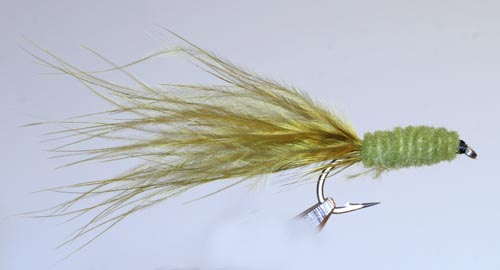
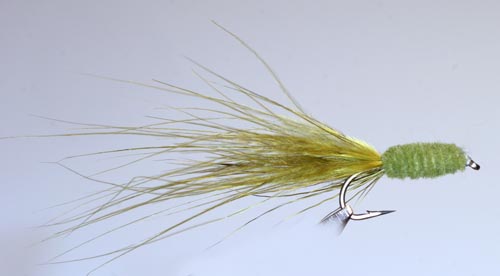
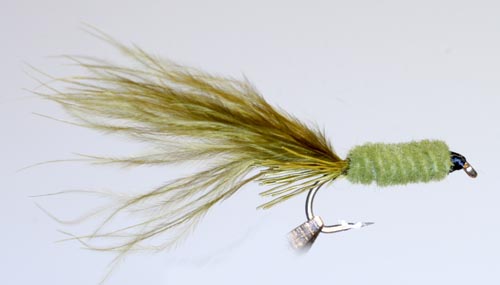
Olive Tadpole (Plattie) Tied by |
|
|
|
|
|
|
|
|
|
|
|
Recipe |
|
|
Hook: |
#8 hook – heavy
wire |
|
Weight |
Lead wire |
|
Tail |
Olive deer
hair Olive marabou |
|
Thread |
6/0 thread (I
use black) |
|
Body |
Olive chenille |
|
Tying:
1) Dress hook 2) Tie in small tuft of deer hair above hook point - helps reduce tail wrapping 3) Tie in tail of marabou 2-3 times length of hook shank above deer hair. Make one wrap of thread around the marabou only to keep it concentrated on the top of the hook shank again helps reduce tail wrapping 4) Wrap lead wire along centre half of the length of the hook shank and double back wrapping second layer to make a “ball” shape. The lead results in a dipping action on the retrieve. 5) Tie in chenille at tail and advance thread to hook eye. In process of this build up small “cone” of thread in front of the lead wire this helps the chenille transition from the lead to hook shank and prevents lead sliding forward 6) Wrap chenille forward to hook eye to form the body 7) Tie off chenille, trim and whip finish
Alternatively
it can be tied in black. In |
|
|
Fishing:
Fish this fly over weed beds, along reed banks or in shallows using figure of 8 retrieve or short erratic pulls to create a darting movement. When fish are swimming circuits in the shallows allow the fly to rest on the bottom in the path of fish and give a short tug as the fish approaches.
(While fishing a lake one weekend there was a 2-3lb Brown cockfish that kept swimming a specific circuit through an area of the shallows, every time I tried to present a fly it spooked and disappeared for 15-20 minutes. Eventually I put the fly on the bottom and waited, as the fish approached I gave a 6 inch in tug this elicited a charging take and the fish was on!) |
|
|
Winning
Fly Tied by |
|
|
Winning Junior Fly tied by Mark Jennings |
|